

http://news.discovery.com
Kasey-Dee Gardner uncovers the strange phenomenon of dinosaur mummification.

An action thriller by Jock Miller
Fossil fuel has an ageless affinity with dinosaurs. To create oil, dinosaurs died.
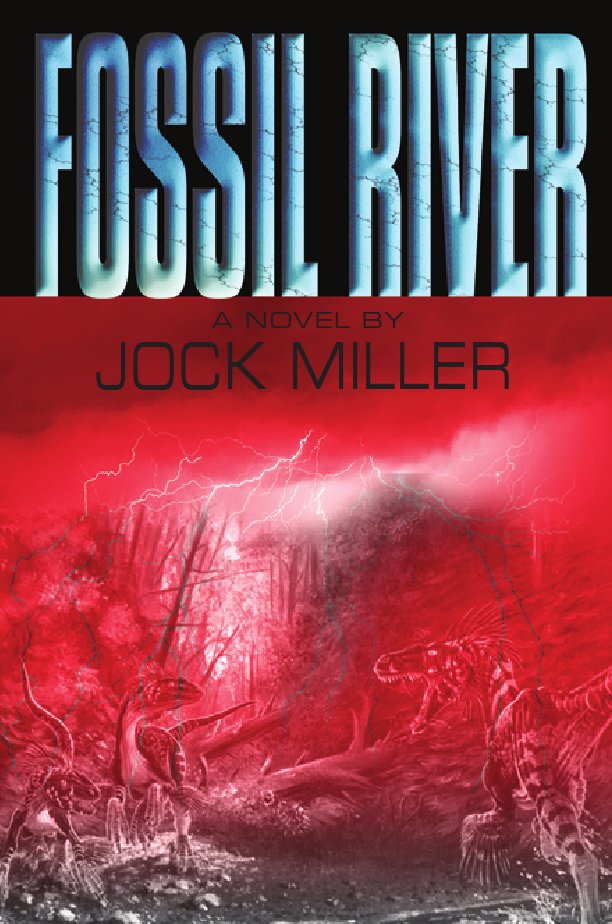 The perfect energy storm is sweeping over the United States: Japan’s Fukushima nuclear plant meltdown has paralyzed nuclear expansion globally, BP’s Gulf of Mexico oil spill has stalled deep water drilling, Arab oil countries are in turmoil causing doubt about access to future oil, the intensity of hurricanes hitting the Gulf’s oil rigs and refineries has intensified due to global warming, and the nation’s Strategic Oil Supply is riding on empty.
The U.S. Military is forced to cut back air, land, and sea operations sucking up 58% of every barrel of oil to protect the nation; U.S. commercial airlines are forced to limit flights for lack of jet fuel; and businesses are challenged to power up their factories, and offices as the U.S. Department of Energy desperately tries to provide a balance of electric power from the network of aged power plants and transmission lines that power up the nation.
The United States must find new sources of domestic fossil fuel urgently or face an energy crisis that will plunge the nation into a deep depression worse than 1929.The energy storm is very real and happening this very moment. But, at the last moment of desperation, the United States discovers the world’s largest fossil fuel deposit found in a remote inaccessible mountain range within Alaska’s Noatak National Preserve surrounding six and a half million acres.
Preventing access to the oil is a colony of living fossil dinosaurs that will protect its territory to the death.Will the nation’s military be paralyzed for lack of mobility fuel, and will people across America run out of gas and be stranded, or will the U.S. Military succeed in penetrating this remote mountain range in northwestern Alaska to restore fossil fuel supplies in time to save the nation from the worst energy driven catastrophe in recorded history?

Spills reaching the shore are dangerous to wildlife. Water birds and mammals become covered in oil, which destroys feathers' water-resistance and the insulation of mammals' fur. Crude oil can poison animals as they try to lick themselves clean. It's not always possible to keep wildlife like birds, otters and walruses away from sea-based oil spills. The consequences of an oil spill linger for decades afterwards. Areas in Alaska affected by the Exxon Valdez spill are still polluted by oil that hasn't biodegraded yet.


 http://www.smithsonianmag.com

Sea turtle nesting season is underway on Gulf of Mexico beaches, and observers say activity seems normal. But these aren't the same animals that nested during last year's Gulf oil spill, and scientists are concerned about a continued rise in turtle deaths.
UNEDITED TRANSCRIPT
The first sea turtle nesting season after the 2010 BP oil spill was contained is underway in the northern Gulf of Mexico. And biologists and turtle conservation groups report a good nesting season so far.
Last summer, as the ruptured well spewed an estimated 5 million barrels of oil into the Gulf, scientists and volunteers launched a risky rescue– moving fragile turtle eggs away from the oil danger.
Biologists and volunteers moved about 28,000 eggs , mostly loggerhead turtles, from Alabama and Florida’s Panhandle to NASA’s Kennedy Space Center. The goal was to spare the vulnerable hatchlings an encounter with the oil. It’s estimated around 14,000 hatchlings were released on Florida’s Atlantic coast.
The tiny turtles were not tagged, so no one really knows where they are now. And if they were spotted, they couldn’t be accurately identified.
Back on the Gulf Coast, it’s nesting season once again, and conservation groups like Alabama’s Share the Beach are finding new nests almost daily– an encouraging sign. But they caution not to read too much into the finds.
SOT: Mike Reynolds, Share the Beach Director
“The nests look normal, the turtles seem normal. So, all in all it seems like a pretty good year. Of course, the turtles that are nesting this year are not the turtles that nested last year. Turtles nest every other year or thereabout and so these turtles nested two years ago. What we will be really interested in seeing is a year from now when last year’s turtles that were here during the oil spill that had the greatest effect from the oil come back and nest on our beaches next year.
There are 5 species of sea turtles that nest on the beaches of the Gulf Coast, and all of them are protected, so, every morning Share the Beach volunteers comb Alabama’s coast, just as they’ve done every nesting season since 2001, looking for telltale signs of a turtle nest – crawl marks and churned up area near a nest site.
And biologists are doing a study as part of the Natural Resource Damage Assessment – attaching satellite tags to incoming mother turtles to monitor their movements.
When the patrols spot a fresh nest too close to the waterline, they move the eggs before they set and become more sensitive to movement. They carefully put the eggs in a new nest and cordon it off. Read More
© 2011 National Geographic; partially funded by NSF; field producing and videography by Fritz Faerber


Marine oil spills are usually measured by the amount of oil floating on the surface. But the BP spill in the Gulf of Mexico—from a deep-sea well required a different approach. Find out how one fluid-dynamics expert caused estimates to rise sharply practically overnight.
© 2011 National Geographic; partially funded by NSF; field producing and videography by Fritz Faerber
UNEDITED TRANSCRIPT
ONE OF THE KEY QUESTIONS IN THE 2010 GULF OIL SPILL WILL LIKELY NEVER BE COMPLETELY ANSWERED – EXACTLY HOW MUCH OIL SURGED INTO THE SEA?
ESTIMATES RANGED IN THE EARLY DAYS OF THE SPILL – WITH THE COAST GUARD AT FIRST SAYING JUST 1,000 BARRELS A DAY WERE LEAKING AND THEN RAISING THAT TO 5,000. BUT ON MAY 12TH, 2010, THAT NUMBER SOARED DRAMATICALLY. THE REASON? A FLUID DYNAMICS EXPERT AT PURDUE UNIVERSITY GOT TO SEE VIDEO OF THE RUPTURED WELL AND SAW THAT THE NUMBERS CLEARLY WERE NOT ADDING UP.
SOT: Steve Wereley, Professor of Mechanical Engineering, Purdue University
“Using a very simple analysis, procedure, I was able to conclude that the flow rate of the oil was considerably higher than previously estimated.”


More than 7,000 feet underwater, the proposed oil wells are located 72 miles off the coast of Louisiana. The wells would be more than 2,000 feet deeper than the BP well that failed in April 2010 and resulted in one the worst oil spills in history.
The Bureau of Ocean Energy Management Regulation and Enforcement approved Shell's proposal in May. Shell's proposal came soon after Exxon Mobil announced the discovery of a substantial oil reserve while drilling 7,000 feet deep in the Gulf of Mexico. The reserve contains at least 700 million barrels of oil equivalent and Exxon Mobil calls it “one of the largest discoveries in the Gulf of Mexico in the last decade.” The company also discovered a reserve of natural gas along with the oil reserves.
After the BP oil spill, much attention was turned to oil companies involved in deep sea oil drilling and prompted the U.S. Government to enact stricter regulations regarding deep sea oil drilling. However, in October, these regulations were relaxed and oil companies began to file proposals for drilling once again.
Shell argues that the environmental groups are ignoring “the comprehensive nature of the approved exploration plan.” Shell claims their oil exploration plan addresses concerns with safety and impacts on the environment.
Shell adds that the groups are protesting something that has yet to happen. The government's approval of the oil exploration plan does not allow the company to drill yet. Shell must be issued a separate drilling permit before being able to start drilling the proposed oil wells.
If permitted to drill, Shell estimates up to 50,000 barrels of oil equivalent can be extracted each day and over 140,000 barrels can be recovered by the end of the project's lifetime.
In March, the U.S Government allowed shell to carry out a separate oil exploration plan 130 miles off the coast of Louisiana. After obtaining a drilling permit, Shell is preparing to begin drilling a new well 2,721 feet deep.
As oil companies resume drilling for oil in the Gulf, President Obama continues to be frowned upon by many environmentalists. Environmental groups accuse the President of disregarding the dangers of deep sea oil drilling, even after seeing firsthand the damage the BP oil spill caused. Says David Guest, an attorney for environmental law firm Earthjustice, “It is as if the government regulators have learned nothing from the BP disaster."
Despite the potential environmental risks, some believe the newly discovered oil reserve in the Gulf of Mexico will reap economical benefits for the country. Says U.S. Representative Fred Upton, R-Mich. and chairman of the House Energy and Commerce Committee, “The prospect of new American-made energy supplies means less pain at the pump for American families and more American jobs.”
Photo credit: flickr.com/photos/19779889@N00/271642795


