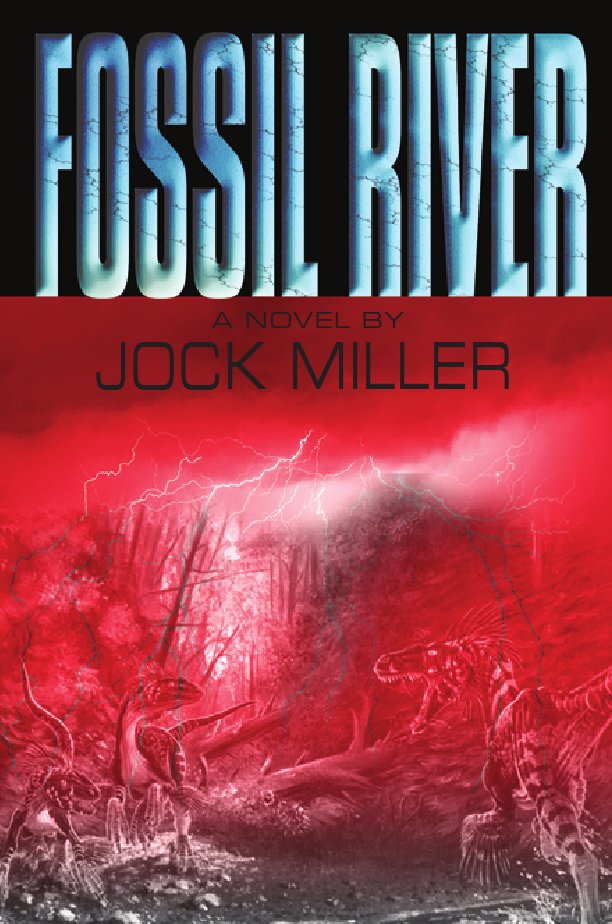
An action thriller by Jock Miller


Fossil fuel has an ageless affinity with dinosaurs. To create oil, dinosaurs died.


purchase on Amazon.com


The perfect energy storm is sweeping over the United States: Japan’s Fukushima nuclear plant meltdown has paralyzed nuclear expansion globally, BP’s Gulf of Mexico oil spill has stalled deep water drilling, Arab oil countries are in turmoil causing doubt about access to future oil, the intensity of hurricanes hitting the Gulf’s oil rigs and refineries has intensified due to global warming, and the nation’s Strategic Oil Supply is riding on empty.

As the energy storm intensifies, the nation’s access to Arab oil, once supplying over sixty percent of our fossil fuel, is being threatened causing people to panic for lack of gas at the pumps, stranding cars across the country and inciting riots.


The U.S. Military is forced to cut back air, land, and sea operations sucking up 58% of every barrel of oil to protect the nation; U.S. commercial airlines are forced to limit flights for lack of jet fuel; and businesses are challenged to power up their factories, and offices as the U.S. Department of Energy desperately tries to provide a balance of electric power from the network of aged power plants and transmission lines that power up the nation.

The United States must find new sources of domestic fossil fuel urgently or face an energy crisis that will plunge the nation into a deep depression worse than 1929.

The energy storm is very real and happening this very moment. But, at the last moment of desperation, the United States discovers the world’s largest fossil fuel deposit found in a remote inaccessible mountain range within Alaska’s Noatak National Preserve surrounding six and a half million acres.

Preventing access to the oil is a colony of living fossil dinosaurs that will protect its territory to the death.

Nobody gets out alive; nobody can identify the predator--until Dr. Kimberly Fulton, Curator of Paleontology at New York’s Museum of Natural History, is flown into the inaccessible area by Scott Chandler, the Marine veteran helicopter pilot who’s the Park’s Manager of Wildlife. All hell breaks loose when Fulton’s teenage son and his girlfriend vanish into the Park.


Will the nation’s military be paralyzed for lack of mobility fuel, and will people across America run out of gas and be stranded, or will the U.S. Military succeed in penetrating this remote mountain range in northwestern Alaska to restore fossil fuel supplies in time to save the nation from the worst energy driven catastrophe in recorded history?

______________________________________________________________________________________________________________________________________


Showing posts with label BP Oil Spill. Show all posts

Gulf Coast States Get Creative With BP Oil Spill Money

Tourists watch as workers clean oil from the sand along a strip of oil that washed up on the beach in Gulf Shores, Ala., in 2010 after the Deepwater Horizon oil rig exploded off the Louisiana coast.


Gulf Coast states are lining up to spend $1 billion from BP on coastal restoration. The money is part of BP's legal responsibility to restore the Gulf of Mexico's natural resources in the aftermath of the worst oil disaster in U.S. history. But the nature of some of the state projects, including boat ramps and a beachfront hotel, is raising questions about just what counts as coastal restoration. 


Dolphin deaths still high after Gulf oil spill, environmentalists say


Dolphin deaths and sea turtle strandings in the waters affected by the 2010 Gulf of Mexico oil spill continue to occur at elevated rates nearly three years after the disaster, environmentalists said in a new report Tuesday.

The National Wildlife Federation report asserted that while the response by BP and other officials to date has been focused on cleaning up visible oil, little has been done to repair the damage caused to marine life and their food chain.

“Despite the public relations blitz by BP, this spill is not over,” David Muth, director of the National Wildlife Federation’s Mississippi River Delta Restoration Program, said in a statement.


... BP said in a statement that it has done plenty to clean up the Gulf over the last three years and protect wildlife.

“No company has done more, faster to respond to an industrial accident than BP did in response to the Deepwater Horizon accident in 2010,” BP said. “As a result of our $14 billion clean-up effort, BP funded early restoration projects as well as natural recovery processes, the Gulf is returning to its baseline condition – the condition it would be in if the accident had not occurred.” 
Read More

Ten New Studies Show Impact on Coast

Communities: Deep Ties, Deeper Pain

A man on a dock on Bayou La Batre, Alabama

 Photograph by Meggan Haller, Keyhole Photo/Corbis

A man takes a break from refurbishing a boat in Bayou La Batre, Alabama—one of the fishing communities deeply affected by the Gulf spill.

Although community attachment is generally seen as a positive that aids in resilience, researchers from Louisiana State University found the negative mental health impacts of the spill were greatest for longtime residents with complex social networks of relatives, friends, and acquaintances. This sense of connectedness, and the accompanying pain, was underscored as people also depended on local resources for their livelihood.

The study is one of the first to systematically collect and analyze public health data on coastal populations affected by the spill. In a late June 2010 telephone survey of 935 households living in the coastal portions of Plaquemines, La Fourche, and Terrebonne parishes, the study found individuals with stronger community attachment exhibited higher self-reported levels of anxiety, worry, nervousness and fear.

Under normal circumstances, community attachment promotes better physical and mental health, but in times of crisis it can be problematic as people's way of life is threatened, the researchers noted.

"In crisis conditions, among those whose resources are threatened, we find that community attachment is associated with higher levels of negative affect," said the study, published in October 2011 in the journal American Behavioral Scientist.

This held true even for people who were not directly employed by the fishing and oil industries, suggesting that community attachment is strong in this area, and that people felt concerned about others whose livelihoods were directly affected.

But attachment may aid in recovery in the long run. Study lead author Matthew Lee, associate vice chancellor in the Office of Research and Economic Development at LSU, said that follow-up surveys have demonstrated that residents who had high community attachment and increased distress early on, "over time, they also recovered more quickly than those who were not highly attached to their communities." He said the findings are consistent with survey results of people recovering from Hurricane Katrina.

—Stacey Schultz

New Studies Show Impact on Coast

Phytoplankton: Oil Sensitivity 

A group of the phytoplankton Ditylum brightwellii


Photograph by Bill Curtsinger, National Geographic

Phytoplankton, whose name literally means "plant drifter," are a presence just beneath the surface of the Gulf, detectable only by the green gloss they lend to the water due to the chlorophyll in their cells. as seen above. But they provide an important base in the aquatic food chain. And following the Gulf spill, researchers from the University of South Carolina (USC) found that even small exposures to oil can have large impacts on these microscopic algae.

"Exposure to very small concentrations of crude oil can result in major shifts in phytoplankton community composition as well as a reduction in total phytoplankton biomass," said James Pinckney, associate professor at USC and a co-author of a study published in January in the journal Estuaries and Coasts.

The researchers attempted to simulate oil spill conditions to examine short-term, two-day changes in phytoplankton community composition and total biomass. In Nalgene polycarbonate bottles, they combined water from Clambake Landing in North Inlet near Georgetown, South Carolina, a National Estuarine Research Reserve, with two separate oil samples, one obtained from the Deepwater Horizon spill and the other a mixture of Texas crude oils. They analyzed a control and six replicated experimental treatments of crude oil at various concentrations.

"Crude oil spills may impact many marsh organisms," the researchers wrote. "But phytoplankton represent a major food source for many larval, juvenile, and adult fish and shellfish species."

There is concern that the changes the researchers observed could lead to a decrease in overall marsh productivity. Continued research is needed on the longer-term impacts of crude oil exposure to phytoplankton and whether the community composition will return to pre-exposure composition after the crude oil is removed, Pinckney says.


—Stacey Schultz

Gulf Spill New Studies Show Impact on Coast

Microorganisms: Life Cycles Disrupted 


Fishermen inspect cane grass damaged by oil


Photograph by David Snyder, ZUMApress. com/Alamy
Fishermen inspect damaged cane grass soon after the Gulf spill, knowing that the oil has killed the small organisms upon which fish and crabs of the wetlands depend for food. By now, everyone knows of the oil-eating microorganisms that helped Gulf recovery. But as is clear in this marsh grass and elsewhere, some of the Gulf's tiniest denizens did not fare well.

The Deepwater Horizon oil spill inhibited  microorganisms' nitrogen cycle, which is critical to ecosystem development and decomposition, according to research by Florida Gulf Coast University.


While some bacteria served as "glorious brave fighters" to help clean up the spill by breaking down the oil, other groups of microorganisms such as archaea were victims, Hidetoshi Urakawa, the lead researcher and assistant professor of the university's department of marine and ecological sciences, said by email.
"The important finding of our study was that oil spills not only damage marine animals and entire food webs, but also the nitrogen cycle, which is one of the major bloodstreams of our planet," Urakawa said.
The data, published in February in the journal Environmental Pollution, found that one common archae bacterium called Nitrosopumilus maritimus showed a particularly high sensitivity to crude oil.
That susceptibility may have an ecological significance, even leading to a shift to bacterial dominance in the aftermath of a major oil spill, the researchers said. But they also cautioned that the variation in petroleum toxicity might be explained in part by the different sizes of microorganisms.

Urakawa said it also might be possible to take the most sensitive archaea and develop a bioassay to measure and monitor petroleum toxicity in the seawater and "help map a future spill."
To conduct their study, the researchers collected tar balls that had drifted ashore in nearby Panama City, Florida, and tested the toxicity responses of bacteria and archaea to oil contamination.
The Deepwater Horizon oil spill provided an opportunity to "think about some of the unseen damages of nature" in the deep ocean, Urakawa said. Jose Barreto, professor of Florida Gulf Coast University's department of chemistry and mathematics, collaborated on the project.

—Jeff Smith

New Studies Show Impact on Coast

Deep-Sea Corals: Widespread Stress

  A fish swims near an artificial reefPhotograph by Charles Fisher, PSU


As the Deepwater Horizon disaster unfolded, images of oiled birds and slick coastlines made headlines while the fate of seafloor ecosystems remained hidden beneath the waves.
But recent research has provided compelling evidence of the spill's impact on deep sea corals, seen clearly in the specimen above, which is now likely dead despite the orange branch tips. "Because of the magnitude of this spill, and because of the fact that it happened so deep, rather than at the surface, it had significant impacts on these biological communities that we've just been beginning to understand," said Haverford College geochemist 
Helen White.

White was lead author on one of the first studies ever to explore the impacts of an oil spill on deep-sea ecosystems, which are separated from the brunt of a typical oil tanker spill by thousands of feet of water.
White and colleagues used a fleet of underwater vehicles to examine distressed Gulf of Mexico corals that Pennsylvania State University's Charles Fisher, the team's science leader, had spotted back in 2010—three months after the leaking Macondo well had been capped. White also employed two-dimensional gas chromatography techniques that fingerprinted the oil residue found on the reefs to the Macondo well some 7 miles (11 kilometers) to the northeast.

"Parts of the corals that had a heavy covering of brown, flocculent material had died when we went back a month later while other parts that had lighter coatings exhibited some signs of recovery," White explained. "Will these coral communities rebound? If so how? Right now we just don't know." Ongoing work will provide vital information about how corals cope with oil from both catastrophic events and natural seeps.

—Brian Handwerk

Read More Here

The Lasting Impact Of Deepwater Horizon

 by Kiley Kroh and Michael Conathan


Two years ago an explosion aboard the Deepwater Horizon rig in the Gulf of Mexico took the lives of 11 men and spewed nearly 5 million barrels of oil into the Gulf. It took 9,700 vessels, 127 aircraft, 47,829 people, nearly 2 million gallons of toxic dispersants, and 89 days to stop the gush of oil. But the work to restore the ecosystem and Gulf economy has only just begun.

The regional oil and gas industry hasn’t skipped a beat despite claims from Big Oil and drilling advocates in Congress that the moratorium on deepwater drilling imposed in the wake of the spill devastated the Gulf economy. The New Orleans Times-Picayun found that oil-fueled economies in the Houma area are humming along just fine. And according to a recent Reuters analysis, Gulf drillers will be busier this year than at any point since the spill, adding eight new deepwater rigs and bringing the total count to 29, just shy of pre-spill levels.

But even though BP’s slick new ads show sparkling beaches and flourishing marshes, the perception that everything is fine in the Gulf is far from the truth. Last week Garret Graves, top coastal advisor to Louisiana Gov. Bobby Jindal, said the state “ still has 200 miles of oiled coast,” including “very clear, retrievable oil in coastal areas,” and called the current conditions “unacceptable.”

While the Obama administration took steps to strengthen offshore drilling safety and oversight, much remains to be done. Tourism in the region has rebounded this year but the Gulf Coast is still struggling with the lingering effects of the spill and will likely continue to do so for decades to come. Here are five reasons the Gulf deserves renewed attention:


Congress’s failure to act


Two years ago the United States spent 89 days battling the single-biggest offshore oil spill in our nation’s history. But Congress hasn’t enacted a single piece of legislation in response.

Fisheries


The Gulf of Mexico is one of the nation’s most productive fishing grounds, providing one-third of all seafood consumed in the United States prior to the spill. But in 2010, at peak response to the oil spill, about 40 percent of Gulf waters were closed to all commercial and recreational fishing—a huge blow to area fishermen, many of whom have yet to rebound.

Beaches


Throughout the spill, BP cleanup crews worked furiously to ensure the majority of oil remained off of area beaches and out of the public eye. Yet the only oil we know was removed for certain was the amount directly recovered from the wellhead—17 percent of the total oil spilled.

Wetlands


Louisiana was home to 40 percent of the continental United States’ wetlands but experienced about 80 percent of all wetlands loss from the 1950s through the middle of the last decade. Wetland loss destroys habitats and removes natural flood protection and environmental services from coastal communities.

The BP oil spill shocked the Gulf Coast’s already compromised ecosystem, which will continue to degrade until comprehensive coastal restoration is undertaken.

Deep-sea death and long-term implications


During the three-month spill, a staggering volume of oil spilled into the Gulf far beneath the surface. We are only beginning to understand the impact that will have on deep-sea health.

Conclusion


Researchers throughout the Gulf Coast emphasize one critical point: It will be a long time before we know the full extent of the oil spill’s damage.

Whales sensed Deepwater Horizon oil rig disaster


Written By Peter Gwynne

sperm whale.jpg


A technique that monitors whales through the sounds they emit has answered a key issue raised by the explosion of the Deepwater Horizon oil rig in the Gulf of Mexico two years ago this month.

The sound-monitoring technique revealed that sperm whales retreated from the immediate area around the spill caused by the explosion.
"There's obvious evidence of relocation," said team member Azmy Ackleh, professor and head of mathematics at the University of Louisiana at Lafayette.

The discovery is important because it provides information about a species almost hunted to extinction for its valuable oil in the 19th century.
Sperm whales are listed as endangered under the terms of the United States Endangered Species Act, and estimates of their population vary between 200,000 and 1.5 million worldwide.

However, said Vassili Papastavrou, lead whale biologist for the International Fund for Animal Welfare who did not work on the study, "sperm whales are difficult animals to count, because they spend so much of their lives beneath the surface. The overall population estimates are so uncertain that it is not possible to determine trends."

The discovery of their relocation also indicates the value of "passive" acoustic technology, which quietly listens for things instead of actively bouncing sounds off objects to find them. This approach, first tried in the 1980s, uses hydrophones mounted on buoys to detect "clicks," the powerful sounds emitted by the sperm whales. The University of Louisiana team, led by Natalia Sidorovskaia, associate professor and chair of the physics department, has extended the technology to localize and track sperm whales and to estimate their populations, and to do the same for other marine mammals, including other types of whales and dolphins.

Gulf dolphins suffer post-oil spill illnesses

deaddolphin520x300

A veterinary technician handles a dead bottlenose dolphin, one of many collected along the Gulf of Mexico. Patrick Semansky/AP

In Barataria Bay, La. (located in the northern Gulf of Mexico), bottlenose dolphins are suffering from severe illnesses - the aftermath of the BP oil spill, according to a report by Click Green.

Last summer, marine biologists with the National Oceanic and Atmospheric Administration conducted physicals on 32 dolphins from that area. Results show many of them are underweight, anemic, have low blood sugar, and exhibit symptoms of liver and lung disease. Nearly half also have exceptionally low levels of the hormones that typically help with stress-coping, metabolism, and the immune system.

Read More

Settlement Talks Pick Up Ahead of BP Oil Spill Trial


Some experts have estimated potential civil and criminal liabilities for the Gulf of Mexico explosion, battled by fireboats in April 2010, at $40 billion.

NEW ORLEANS — Nearly two years after the oil rig explosion that killed 11 people and spilled millions of barrels of crude oil into the Gulf of Mexico, the myriad plaintiffs suing BP and other companies over the disaster are about to get their day in court.
Or not.
With the start of the high-profile trial set for next Monday, and the specter of potential liability that some experts have estimated at $40 billion, BP and other defendants are stepping up negotiations to end the litigation before Judge Carl J. Barbier of Federal District Court picks up his gavel.
“We are ready to settle, if we can do so on fair and reasonable terms,” Robert Dudley, BP’s chief executive, said this month during a conference call about the company’s earnings. “But we are preparing vigorously for trial.”
Charges from hundreds of civil cases from plaintiffs that include the United States government, state and local governments, and individuals and businesses have been consolidated in a federal courtroom here. Along with BP, defendants include Transocean, the owner of the Deepwater Horizon rig; Halliburton, the company that poured the concrete that lined the well; and Cameron International, which made the industry fail-safe device known as a blowout preventer.
Numerous reports have identified errors and problems that contributed to the largest oil spill in United States history, including a faulty concrete job, poor decisions leading up to the blast and the failure of the blowout preventer’s rams and blades to stop the oil.
Several attorneys familiar with the negotiations said settlement talks had intensified in recent weeks. On Friday, Moex Offshore became the first company among the defendants to settle with the government. Moex, which owned 10 percent of the well but did not have a role in operating it, agreed to pay $90 million to federal and state governments. The Department of Justice said the deal included $70 million in civil penalties, the most ever under the 1972 federal Clean Water Act — a record that is likely to be broken before long.
Some of the remaining obstacles to a larger settlement deal are among the defendant companies, rather than between them and the plaintiffs, and concern the amounts that the various parties would contribute toward the negotiated sum.
To many familiar with the case, there is little question that BP would be better off settling. “The incentives are very large for BP to get out,” said Edward F. Sherman, a law professor at Tulane University here.


Read More

BP Oil Spill Haunts Gulf Business Owners Almost Two Years After Disaster


Clyde Perez on a shrimping boat in Greens Ditch, Louisiana. Photographer: Joe Raedle/Getty Images

Oyster boats are docked after waterways where oysters are harvested were shut down due to the BP Plc Deepwater Horizon offshore oil well spill in Empire, Louisiana, U.S., on May 1, 2010. Photographer: Derick E. Hingle/Bloomberg

Louisiana oysterman Terrance M. Shelley was struggling to keep up with demand by New Orleans restaurants before BP Plc (BP/)’s Macondo well blew out in April 2010, crippling the processing plant he opened six months earlier.

“Demand was exploding” until then, said Shelley, 60, whose family has 18,000 acres of oyster reefs.

The state closed the reefs because of contamination from the Gulf of Mexico spill. Shelley’s business dried up as customers and wholesalers shunned Gulf seafood.

Shelley is among thousands of coastal residents, business people and property owners who will be affected by a trial starting Feb. 27 in New Orleans federal court to determine who must compensate spill victims. The spill spewed more than 4.1 million barrels of crude over 87 days into the Gulf, whose $3 billion fishing industry provides one-third of all seafood consumed in the U.S., the plaintiffs said in court papers.

At the peak of the disaster, in June 2010, 40 percent of Gulf waters were closed to commercial and recreational fishing, according to the National Oceanic and Atmospheric Administration, or NOAA.

Gulf Coast seafood restaurants took the brunt of the disruption, which cut supply chains and chased away customers afraid of contamination. The blow fell hardest on Louisiana, much of which a panel of judges said in 2010 was closest to the “geographic and psychological center of gravity” of the spill.


Read More

How Microbes Teamed to Clean Gulf Scientists Studied 52 Species of Bacteria and Water Currents to Explain Demise of Oil and Gas Plume

http://online.wsj.com

A fortuitous combination of ravenous bacteria, ocean currents and local topography helped to rapidly purge the Gulf of Mexico of much of the oil and gas released in the Deepwater Horizon disaster of 2010, researchers reported on Monday.

WSJ's Gautam Naik has details of study showing that more than 50 species of microbes consumed much of the oil and gas plume in the Gulf of Mexico caused by the 210 Deepwater Horizon disaster. AP Photo/Eric Gay

After spewing oil and gas for nearly three months, the BP PLC well was finally capped in mid-July 2010. Some 200,000 tons of methane gas and about 4.4 million barrels of petroleum spilled into the ocean. Given the enormity of the spill, many scientists predicted that a significant amount of the resulting chemical pollutants would likely persist in the region's waterways for years.

According to a new federally funded study published Monday by the National Academy of Sciences, those scientists were wrong. By the end of September 2010, the vast underwater plume of methane, plus other gases, had all but disappeared. By the end of October, a significant amount of the underwater offshore oil—a complex substance made from thousands of compounds—had vanished as well.

"There was a lot of doomsday talk," said microbiologist David Valentine of the University of California, Santa Barbara, and co-author of the study, published in Proceedings of the National Academy of Sciences. But it turns out "the ocean harbors organisms that can handle a certain amount of input" in the form of oil and gas pollutants, he said.

A year ago, Dr. Valentine and other scientists published a paper describing how bacteria that feed on naturally occurring oil and gas leaks underwater had apparently devoured much of the toxic chemicals released in the BP spill. That federally funded study, published in the journal Science, triggered disbelief among other researchers who questioned whether microbes could gobble up that much gas and oil so quickly.

Dr. Valentine and colleagues have now used a computer model to explain just how that scenario might have played out, though some scientists remain skeptical.

It was an intricate challenge. The first step was to estimate the flow rate of the various hydrocarbons from the well over the 87 days that the spill continued. The researchers identified 26 classes of such chemicals; they then had to figure out which of these chemicals stayed in the deep plume that remained more than 3,000 feet underwater, and which ones rose up to the surface. For example, in the plume, certain chemicals dissolved completely in the water, including the methane gas, while some of the oil droplets were atomized and remained suspended in the water. A lot of the surface oil evaporated or washed up on Gulf shorelines.

Next, the scientists set about identifying the main species of oil-and-gas-eating bacteria that lived in the deep Gulf. They identified 52 main species of such microbes. The scientists also estimated how quickly the bacteria consumed oil and gas and how much the bacteria colonies grew.

The final step was to model the complex movement of the water in the Gulf to determine where the oil and gas—and the bacteria—got transported. Igor Mezic, a colleague of Dr. Valentine's and also a co-author, had published a study in 2011 predicting where the BP oil slick had spread. That analysis included data from the U.S. Navy's model of the Gulf's ocean currents and observations of the water's movements immediately after the spill and for several months after it ended.

The UC Santa Barbara researchers decided to marry their two computer models—the one about the spill-eating bacteria with the one capturing the movement of water. When they ran the joint model, they found that it helped to explain the puzzle of the rapidly vanishing oil spill.

The model showed that the topography in the Gulf had played a vital role. Because the Gulf is bounded on three sides by land—north, east and west—the water currents don't flow in a single direction as in a river. Instead, the water sloshes around, back and forth, as if it were trapped in a washing machine.

An initial population of bacteria encountered the spill near the BP well, its population grew, and then it was swept away by the ocean currents. But when the water circled back—that washing-machine effect—it was already loaded with these hungry bacteria, which immediately went on the attack again, mopping up another round of hydrocarbons. These repeated forays over the BP well, by the ever-growing bacterial populations, sped up the rate at which the methane and offshore oil got devoured.

Dr. Valentine suggested that oil companies ought to ascertain the currents, water motion and native microbial community in the water before embarking on any major offshore drilling project. "Then, if there is an event, we'd be many steps ahead of understanding where the oil may go and what the environment's response may be," he said.

Ira Leifer, a petroleum geochemist also at UC Santa Barbara who co-wrote a rebuttal to the 2011 paper published in Science, said the latest study was limited because it was based on a computer model "which is only as good as the input or assumptions" on which it is based. He noted, for example, that the authors had neglected to include a discussion of whether the bacteria would run out of critical nutrients necessary for them to consume the oil and gas and reproduce.

The research was funded by the National Science Foundation, the Department of Energy and the Office of Naval Research.

Write to Gautam Naik at gautam.naik@wsj.com

BP oil spill of April 2010 was not the largest in U.S. history, lawmaker says


WASHINGTON -- At a recent hearing of the House Natural Resources Committee, U.S. Rep. Edward Markey, D-Mass., called the BP oil spill the "worst oil spill in our nation's history," a commonplace description of an event that President Obama, in his Oval Office address on the spill last June, told the nation was "the worst environmental disaster America has ever faced."
lakeview-gusher-spewing.jpg
A 1910 photograph shows the Lakeview Gusher in Maricopa, Calif., which spewed 48,000 barrels of oil a day.
Later in the hearing, Rep. Jeff Landry, R-New Iberia, who had not been present when Markey made his claim, sought to correct the record. The distinction of being the largest oil spill in American history, he said, belongs to California's Lakeview Gusher of 1910.

For 18 months in 1910 and 1911, the Lakeview Gusher spewed 9.4 million barrels of oil onto the scrubland of California's San Joaquin Valley -- nearly twice the 4.9 million barrels discharged into the Gulf of Mexico in the Macondo blowout.

Landry's comment might seem a petty exercise in misdirection. Markey had described it as the "worst," not the "largest," oil spill. And, the Lakeview Gusher was hardly seen as a disaster on the scale of the Gulf spill. In an age before TV, let alone cable TV, it was hardly seen at all, although an excursion train transported San Franciscans nearly 300 miles to view this geyser of hydrocarbons. A century later, according to Don Maxwell, who runs a local museum, "the sagebrush is the same where it spilled as where it didn't."
But Landry said his point was to place the Deepwater Horizon disaster in context, especially as he and other members of the Louisiana delegation have pushed to get offshore drilling back on track.
Read More

One Year Later: Gulf Coast Restoration Plan Released

SustainableBusiness.com News

One year after President Obama established the Gulf Coast Ecosystem Restoration Task Force, the group issued its strategy for reversing the decline of the region's ecosystem.

The Task Force says its preliminary report is the first formal agreement on what the priorities should be for coastal restoration.

The Task Force includes representatives from the Environmental Protection Agency (EPA) as well as the five Gulf States and 10 other federal agencies. They held over 40 public hearings before preparing this plan.

Even before the disastrous BP oil spill last year, "The Gulf of Mexico endured decades of decline that threatened the environmental and economic health of this region," says EPA Administrator Lisa Jackson. "This strategy is designed to prepare the region for transitioning from a response to the spill into a long-term recovery that supports the vital ecosystem and the people who depend on it."

"The report attempts to begin reversing 80 years of mismanagement," says Garret Graves, Task Force vice-chair and chair of the Coastal Protection and Restoration Authority of Louisiana. "It identifies critical issues such as changes in river management, the use of dredged sediment, navigation channel bank stabilization, and the need to expedite the snail's pace process of implementing water resources projects. History has proven that being reactive on disaster mitigation costs exponentially more. This report is an important first step in moving toward a proactive strategy as recognized through the implementation of the state's coastal master plan."

The report's major recommendations are:

1. Restore and conserve habitat - Stop the loss of critical wetlands, sand barriers and beaches, and key habitats for a wide range of fish and other animals.

Creating channels and levees from dredging the lower Mississippi has disconnected the vast wetland delta from the source of sediments that built it over thousands of years.

The plan is to restore that sediment supply so that it can build up eroded wetlands and ultimately reconnect them to their historic source of sediments.

To help do this, the strategy recommends prioritizing ecosystem restoration by ensuring that social, environmental and economic outcomes are fully considered in all river management decisions. It should be placed on equal footing with other priorities such as navigation and flood damage risk reduction.

They also recommend expanding conservation areas in addition to restoring and conserving coastal and near-shore habitats.

2. Restore Water Quality such as Nutrient Flow into the Gulf.

The "Dead Zone" in the Gulf - the largest hypoxic zone in the US and second-largest in the world - is caused by the input of excess nutrient pollution to the Gulf, most of which comes from upstream from states along the Mississippi River.

Nitrogen fertilizer from crops needs to be controlled, for example, as it travels down the Mississippi River and ends up in the Gulf.

It will be a challenge to address this since there are so many states involved. They aslo recommend collaborating with Mexico to assess and reduce emissions from oceangoing vessels in the Gulf that degrade water quality.

3. Enhance Resiliency Among Coastal Communities

The task force proposes to work with each Gulf state to build greater integrated capacity through effective coastal improvement plans, such as community planning, risk assessment and smart growth implementation.

The Task Force will begin immediately reviewing existing policies, programs and regulations that are slowing down restoration progress, particularly in habitat restoration. They will also find ways to get restoration efforts going and to measure success.

Unfortunately, the recommendations come at a time of severe fiscal restraint and resistance to to implementing large projects, many of which are necessary to revive the Gulf.

President Obama called for the creation of the task force after Ray Mabus, Secretary of the Navy, submitted a report on the Gulf's health after the three-month BP oil spill. Under the president's plan, a permanent council will implement the task force's strategy along with relevant federal and state agencies, and nonprofits.

Funding will largely come from Clean Water Act civil penalties resulting from the Deepwater Horizon oil spill. A bill is winding its way through the Senate to direct four-fifths of the spill penalties to coastal restoration, and a companion bill was introduced in the House last week.

Here's the report:

Website: www.epa.gov/gcertf/pdfs/gcertfenlishver.pdf

New microbe discovered eating Gulf oil spill

Great potential' for dispersing oil in deep sea, researchers report

msnbc.com staff and news service reports

Visit msnbc.com for breaking news, world news, and news about the economy


A newly discovered type of oil-eating microbe suddenly is flourishing in the Gulf of Mexico and gobbling up the BP spill at a much faster rate than expected, scientists reported Tuesday.

Scientists discovered the new microbe while studying the underwater dispersion of millions of gallons of oil spilled since the explosion of BP's Deepwater Horizon drilling rig.

Also, the microbe works without significantly depleting oxygen in the water, researchers reported in the online journal Sciencexpress.

"Our findings ... suggest that a great potential for intrinsic bioremediation of oil plumes exists in the deep-sea," lead researcher Terry Hazen, a microbial ecologist at Lawrence Berkeley National Lab in Berkeley, California, said in a statement.

The data is also the first ever on microbial activity from a deep-water dispersed oil plume, Hazen said.

Environmentalists have raised fears about the giant oil spill and the underwater plume of dispersed oil, particularly its potential effects on sea life. A report just last week described a 22-mile-long underwater mist of tiny oil droplets.

"Our findings show that the influx of oil profoundly altered the microbial community by significantly stimulating deep-sea" cold temperature bacteria that are closely related to known petroleum-degrading microbes, Hazen reported.

Their findings are based on more than 200 samples collected from 17 deep-water sites between May 25 and June 2. They found that the dominant microbe in the oil plume is a new species, closely related to members of Oceanospirillales.

This microbe thrives in cold water, with temperatures in the deep recorded at 41 degrees Fahrenheit.

Hazen suggested that the bacteria may have adapted over time due to periodic leaks and natural seeps of oil in the Gulf.

Scientists also had been concerned that oil-eating activity by microbes would consume large amounts of oxygen in the water and create a "dead zone" dangerous to other life. The new study found that oxygen saturation outside the oil plume was 67 percent while within the plume it was 59 percent.

"The low concentrations of iron in seawater may have prevented oxygen concentrations dropping more precipitously from biodegradation demand on the petroleum, since many hydrocarbon-degrading enzymes have iron as a component," Hazen said. "There's not enough iron to form more of these enzymes, which would degrade the carbon faster but also consume more oxygen."

These latest findings may initially seem to be at odds with the study published last Thursday in Science by researchers from Woods Hole Oceanographic Institution, which confirmed the existence of the oil plume and said microorganisms did not seem to be biodegrading it very quickly.

However, Hazen and Rich Camilli of Woods Hole both said Tuesday that the studies complement each other.

The Woods Hole team used a robot submarine and a mass spectrometer to detect the plume, but were forced to leave the area in late June, when Hurricane Alex threatened. At that time, they figured the plume was likely to remain for some time.

But that was before the well was capped in mid-July. Hazen said that within two weeks of the capping, the plume could not be detected, but there was a phenomenon called marine snow that indicated microbes had been feasting on hydrocarbons.

As of Tuesday, there was no sign of the plume, Hazen said.

That doesn't mean there is no oil left from the 4.9 million barrels of crude that spilled into the Gulf after the April 20 blowout at BP's Deepwater Horizon rig. The U.S. government estimated on Aug. 4 that 50 percent of the BP oil is gone from the Gulf and the rest is rapidly degrading.

The research was supported by an existing grant with the Energy Biosciences Institute, a partnership led by the U.C. Berkeley and the University of Illinois that is funded by a $500 million, 10-year grant from BP. Other support came from the U.S. Department of Energy and the University of Oklahoma Research Foundation.

Sciencexpress is the online edition of the journal Science.

The Associated Press and Reuters contributed to this report.

U.S. Investigation Finds BP 'Ultimately Responsible,' Contractors to Blame


A U.S. investigation board blames the worst offshore oil spill in the nation's history on British oil giant BP and also points to BP contractors for contributing to the Gulf of Mexico disaster.

The loss of 11 lives at BP's Macondo oil well in the Gulf of Mexico on April 20, 2010, and devastating pollution of the gulf were the result of "poor risk management, last-minute changes to plans, failure to observe and respond to critical indicators, inadequate well control response, and insufficient emergency bridge response training," finds the board's final report.

Response vessels spray water onto the blazing Deepwater Horizon oil rig in the Gulf of Mexico, April 21, 2011 (Photo courtesy U.S. Coast Guard)

The final investigative report of the Joint Investigation Team of the U.S. Coast Guard and the Bureau of Ocean Energy Management, Regulation and Enforcement, BOEMRE, was released Wednesday.

It concludes that four companies were responsible for the April 20 blowout that killed 11 crewmembers and spilled five million barrels of oil into the gulf over the next 87 days.

Read More


To view a database of all legal actions click here.


Copyright Environment News Service (ENS) 2011. All rights reserved.

Blue August: Paradise Lost

Planet Green

Louisiana supplies 25% of the U.S. seafood supply... but no one is buying because of the oil spill. Long time resident of Grand Isle, Gerald, has never seen anything like it in his 74 years.


Blue August: Grand Isle, Now A Ghost Town

Planet Green


Grand Isle used to be bustling with tourists... but now it sits empty. It could take decades for the region to recover from all the lost revenue from the oil spill.


Blue August: Faces Of The Gulf

Planet Green


Philippe Cousteau travels to the Gulf region to meet the real people affected by the BP oil spill and how their lives are forever changed.