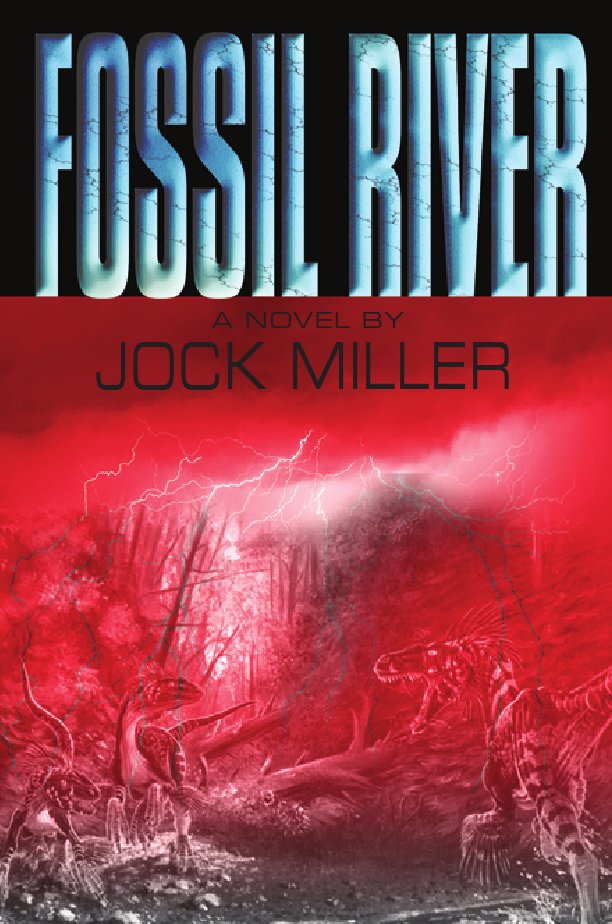
An action thriller by Jock Miller


Fossil fuel has an ageless affinity with dinosaurs. To create oil, dinosaurs died.


purchase on Amazon.com


The perfect energy storm is sweeping over the United States: Japan’s Fukushima nuclear plant meltdown has paralyzed nuclear expansion globally, BP’s Gulf of Mexico oil spill has stalled deep water drilling, Arab oil countries are in turmoil causing doubt about access to future oil, the intensity of hurricanes hitting the Gulf’s oil rigs and refineries has intensified due to global warming, and the nation’s Strategic Oil Supply is riding on empty.

As the energy storm intensifies, the nation’s access to Arab oil, once supplying over sixty percent of our fossil fuel, is being threatened causing people to panic for lack of gas at the pumps, stranding cars across the country and inciting riots.


The U.S. Military is forced to cut back air, land, and sea operations sucking up 58% of every barrel of oil to protect the nation; U.S. commercial airlines are forced to limit flights for lack of jet fuel; and businesses are challenged to power up their factories, and offices as the U.S. Department of Energy desperately tries to provide a balance of electric power from the network of aged power plants and transmission lines that power up the nation.

The United States must find new sources of domestic fossil fuel urgently or face an energy crisis that will plunge the nation into a deep depression worse than 1929.

The energy storm is very real and happening this very moment. But, at the last moment of desperation, the United States discovers the world’s largest fossil fuel deposit found in a remote inaccessible mountain range within Alaska’s Noatak National Preserve surrounding six and a half million acres.

Preventing access to the oil is a colony of living fossil dinosaurs that will protect its territory to the death.

Nobody gets out alive; nobody can identify the predator--until Dr. Kimberly Fulton, Curator of Paleontology at New York’s Museum of Natural History, is flown into the inaccessible area by Scott Chandler, the Marine veteran helicopter pilot who’s the Park’s Manager of Wildlife. All hell breaks loose when Fulton’s teenage son and his girlfriend vanish into the Park.


Will the nation’s military be paralyzed for lack of mobility fuel, and will people across America run out of gas and be stranded, or will the U.S. Military succeed in penetrating this remote mountain range in northwestern Alaska to restore fossil fuel supplies in time to save the nation from the worst energy driven catastrophe in recorded history?

______________________________________________________________________________________________________________________________________


Showing posts with label Glacier National Park. Show all posts

Did You Know?


The "Backbone of the World" is the Blackfeet tribal name given to the greater Glacier National Park ecosystem.


Known to Native Americans as the "Shining Mountains" and the "Backbone of the World", Glacier National Park preserves more than a million acres of forests, alpine meadows, lakes, rugged peaks and glacial-carved valleys in the Northern Rocky Mountains. Its diverse habitats are home to nearly 70 species of mammals including the grizzly bear, wolverine, gray wolf and lynx. Over 270 species of birds visit or reside in the park, including such varied species as harlequin ducks, dippers and golden eagles. The landscape is a hiker's paradise that is traversed by more than 740 miles of maintained trails. Glacier Park's varied climate influences and its location at the headwaters of the Pacific, Atlantic and Hudson Bay drainages have given rise to an incredible variety of plants and animals.


http://www.nps.gov/glac/index.htm


Glacier National Park


historic photo of Grinnell Glacier
NPS Photo
Grinnell Glacier circa 1910

Throughout time, people have sought out Glacier National Park's rugged peaks, clear waters, and glacial-carved valleys; its landscape giving both desired resources and inspiration to those persistent enough to venture through it.

Evidence of human use in this area dates back to over 10,000 years. By the time the first European explorers came into this region, several different tribes inhabited the area. The Blackfeet Indians controlled the vast prairies east of the mountains, while the Salish and Kootenai Indians lived in the western valleys, traveling over the mountains in search of game and to hunt the great herds of buffalo on the eastern plains.

The majority of early European explorers came to this area in search of beaver and other pelts. They were soon followed by miners and, eventually, settlers looking for land. By 1891, the completion of the Great Northern Railway sealed the area’s fate, allowing a greater number of people to enter into the heart of northwest Montana. Homesteaders settled in the valleys west of Marias Pass and soon small towns developed.

George Bird Grinnell exploring a Glacier

NPS Photo

Dr. and Mrs. George Bird Grinnell ontop of Grinnell Glacier

Around the turn of the century, people started to look at the land differently. For some, this place held more than minerals to mine or land to farm…they began to recognize that the area had a unique scenic beauty all to its own.

By the late 1800s, influential leaders like George Bird Grinnell, pushed for the creation of a national park. Fifteen years later, Grinnell and others saw their efforts rewarded when President Taft signed the bill establishing Glacier as the country’s 10th national park.


http://www.nps.gov/glac/index.htm

Glacier National Park One of the Ten Best Hiking Spots in the U.S.

Montana's Glacier National Park is a true hiker's paradise, with more than 730 miles (1,174 kilometers) of marked trails within its boundaries. It's such a popular hiking destination that more than half of the people who enter the park are there to set off on foot and explore. The park and its trails are known for impressive mountain peaks, isolated alpine lakes and no shortage of wildlife. The park gets its name from the huge glaciers that helped to shape the park's rock formations 10,000 years ago. In 1850, the park had 150 glaciers, but today there are only 26 remaining. Because of climate change, those are predicted to be gone by the year 2020 [source: NPS.gov]. Like most of our national parks, you'll need a backcountry permit to hike overnight in Glacier, but you don't need to plan a year in advance like the more popular Grand Canyon and Yosemite. Another consideration for hiking in Glacier is the snow line. By mid-June you can hike the lower elevations with no fear, but you'll have to wait until late July for the snow to melt in the higher elevations.


http://www.nps.gov/glac/index.htm