
Spills reaching the shore are dangerous to wildlife. Water birds and mammals become covered in oil, which destroys feathers' water-resistance and the insulation of mammals' fur. Crude oil can poison animals as they try to lick themselves clean. It's not always possible to keep wildlife like birds, otters and walruses away from sea-based oil spills. The consequences of an oil spill linger for decades afterwards. Areas in Alaska affected by the Exxon Valdez spill are still polluted by oil that hasn't biodegraded yet.

An action thriller by Jock Miller
Fossil fuel has an ageless affinity with dinosaurs. To create oil, dinosaurs died.
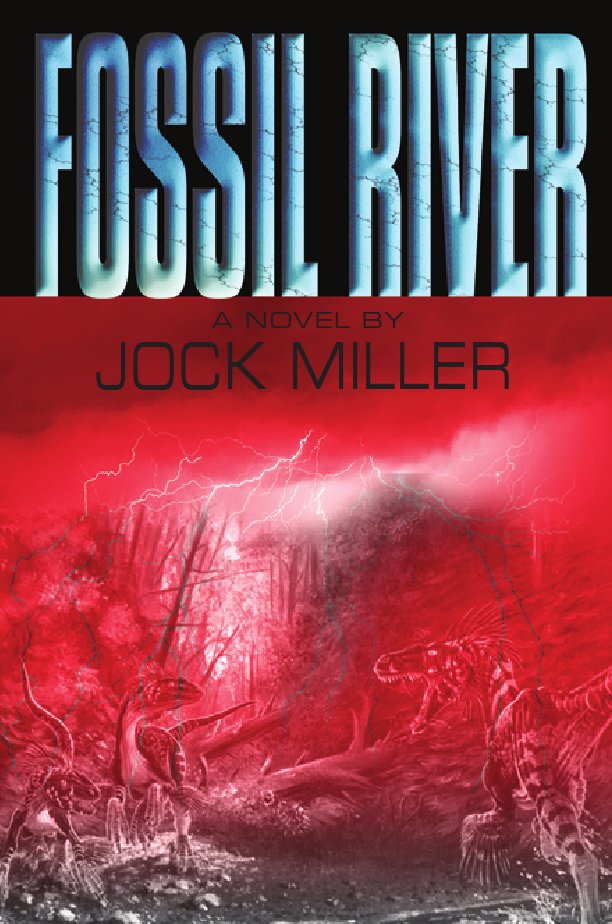 The perfect energy storm is sweeping over the United States: Japan’s Fukushima nuclear plant meltdown has paralyzed nuclear expansion globally, BP’s Gulf of Mexico oil spill has stalled deep water drilling, Arab oil countries are in turmoil causing doubt about access to future oil, the intensity of hurricanes hitting the Gulf’s oil rigs and refineries has intensified due to global warming, and the nation’s Strategic Oil Supply is riding on empty.
As the energy storm intensifies, the nation’s access to Arab oil, once supplying over sixty percent of our fossil fuel, is being threatened causing people to panic for lack of gas at the pumps, stranding cars across the country and inciting riots.
The U.S. Military is forced to cut back air, land, and sea operations sucking up 58% of every barrel of oil to protect the nation; U.S. commercial airlines are forced to limit flights for lack of jet fuel; and businesses are challenged to power up their factories, and offices as the U.S. Department of Energy desperately tries to provide a balance of electric power from the network of aged power plants and transmission lines that power up the nation.
The United States must find new sources of domestic fossil fuel urgently or face an energy crisis that will plunge the nation into a deep depression worse than 1929.The energy storm is very real and happening this very moment. But, at the last moment of desperation, the United States discovers the world’s largest fossil fuel deposit found in a remote inaccessible mountain range within Alaska’s Noatak National Preserve surrounding six and a half million acres.
Preventing access to the oil is a colony of living fossil dinosaurs that will protect its territory to the death.Nobody gets out alive; nobody can identify the predator--until Dr. Kimberly Fulton, Curator of Paleontology at New York’s Museum of Natural History, is flown into the inaccessible area by Scott Chandler, the Marine veteran helicopter pilot who’s the Park’s Manager of Wildlife. All hell breaks loose when Fulton’s teenage son and his girlfriend vanish into the Park.
Will the nation’s military be paralyzed for lack of mobility fuel, and will people across America run out of gas and be stranded, or will the U.S. Military succeed in penetrating this remote mountain range in northwestern Alaska to restore fossil fuel supplies in time to save the nation from the worst energy driven catastrophe in recorded history?
Showing posts with label Planet Green. Show all posts
Showing posts with label Planet Green. Show all posts
When will the world reach peak oil?
by Jacob Silverman
"Peak oil" refers to the idea that at some point oil production will reach its maximum, after which it will enter a phase of decline. Although a tremendous amount of unrecovered oil still exists in the world, some oil, perhaps trillions of barrels, will remain out of reach of energy companies -- either because of the cost of production or because of engineering challenges. What's more, by the time we would be able to tap all of the world's oil supplies, we'd be so besieged by the effects of climate change -- itself brought on by burning fossil fuels like oil -- that producing more oil would only compound the world's problems.
As for when peak oil might be reached, that's less clear. Some contend that it's already happened, or that we'll reach peak oil in within the next 10 to 20 years [source: Lynch]. But for many experts, the much-prophesied moment of peak oil continues to be pushed farther down the road, as new extraction techniques continue to open up previously untappable reserves. And even now, well into the petroleum age, new oil deposits are occasionally found, while the sizes of others are often determined to be larger than originally estimated.
Read More
It's not a question of when so much as who. Some countries have already reached peak oil. For example, U.S. oil production peaked in 1971 and has been dropping off ever since. Since worldwide oil production seems to have plateaued in 2005, some experts think the world has already peaked. Other predictions range from later this decade to later this century. It's impossible to tell exactly how much oil remains in the Earth, and we'll only be able to recognize the moment of peak oil in retrospect.
"Peak oil" refers to the idea that at some point oil production will reach its maximum, after which it will enter a phase of decline. Although a tremendous amount of unrecovered oil still exists in the world, some oil, perhaps trillions of barrels, will remain out of reach of energy companies -- either because of the cost of production or because of engineering challenges. What's more, by the time we would be able to tap all of the world's oil supplies, we'd be so besieged by the effects of climate change -- itself brought on by burning fossil fuels like oil -- that producing more oil would only compound the world's problems.
As for when peak oil might be reached, that's less clear. Some contend that it's already happened, or that we'll reach peak oil in within the next 10 to 20 years [source: Lynch]. But for many experts, the much-prophesied moment of peak oil continues to be pushed farther down the road, as new extraction techniques continue to open up previously untappable reserves. And even now, well into the petroleum age, new oil deposits are occasionally found, while the sizes of others are often determined to be larger than originally estimated.
Read More
It's not a question of when so much as who. Some countries have already reached peak oil. For example, U.S. oil production peaked in 1971 and has been dropping off ever since. Since worldwide oil production seems to have plateaued in 2005, some experts think the world has already peaked. Other predictions range from later this decade to later this century. It's impossible to tell exactly how much oil remains in the Earth, and we'll only be able to recognize the moment of peak oil in retrospect.

Focus Earth: Nuclear Power, Safer? Cleaner?
France uses nuclear energy to power 80 percent of its country, and Bob Woodruff talks with the president of the leading French company, Areva, which thinks it can help power plants in the U.S. become cleaner, safer, and more efficient.
http://planetgreen.discovery.com
Focus Earth: Shell Oil Company, Are They Greenwashing?
Focus Earth's, Bob Woodruff interviews Marvin Odum, President of Shell Oil to find out more about their green initiatives. Are they really green or are they greenwashing and destroying the environment?
http://planetgreen.discovery.com
Blue August: Paradise Lost
Planet Green
Louisiana supplies 25% of the U.S. seafood supply... but no one is buying because of the oil spill. Long time resident of Grand Isle, Gerald, has never seen anything like it in his 74 years.
Louisiana supplies 25% of the U.S. seafood supply... but no one is buying because of the oil spill. Long time resident of Grand Isle, Gerald, has never seen anything like it in his 74 years.
Blue August: Grand Isle, Now A Ghost Town
Planet Green
Grand Isle used to be bustling with tourists... but now it sits empty. It could take decades for the region to recover from all the lost revenue from the oil spill.
Grand Isle used to be bustling with tourists... but now it sits empty. It could take decades for the region to recover from all the lost revenue from the oil spill.
Blue August: Faces Of The Gulf
Planet Green
Philippe Cousteau travels to the Gulf region to meet the real people affected by the BP oil spill and how their lives are forever changed.
Philippe Cousteau travels to the Gulf region to meet the real people affected by the BP oil spill and how their lives are forever changed.
Stories from the Gulf: Backyard Used to Be Water
Planet Green
Those living on the marsh and water near the Gulf Oil Spill face a changed landscape forever.
Those living on the marsh and water near the Gulf Oil Spill face a changed landscape forever.
Stories from the Gulf: Rebuilding a Dream
See a few determined locals stand up for their community and the Gulf after the oil spill.
Blue August: Oyster Bay
Planet Green
Just because the oil hasn't reached Oyster Bay yet, doesn't mean the effects can't be felt. If the sale of seafood continues to plummet a generation of oystermen will be lost.
Just because the oil hasn't reached Oyster Bay yet, doesn't mean the effects can't be felt. If the sale of seafood continues to plummet a generation of oystermen will be lost.
Stories from the Gulf: A Fisherman's Outlook
Planet Green
See a commercial fisherman's take on the Gulf Oil Spill and the impact of mass pollution.
See a commercial fisherman's take on the Gulf Oil Spill and the impact of mass pollution.
Subscribe to:
Posts (Atom)