An action thriller by Jock Miller


Fossil fuel has an ageless affinity with dinosaurs. To create oil, dinosaurs died.


purchase on Amazon.com


The perfect energy storm is sweeping over the United States: Japan’s Fukushima nuclear plant meltdown has paralyzed nuclear expansion globally, BP’s Gulf of Mexico oil spill has stalled deep water drilling, Arab oil countries are in turmoil causing doubt about access to future oil, the intensity of hurricanes hitting the Gulf’s oil rigs and refineries has intensified due to global warming, and the nation’s Strategic Oil Supply is riding on empty.

As the energy storm intensifies, the nation’s access to Arab oil, once supplying over sixty percent of our fossil fuel, is being threatened causing people to panic for lack of gas at the pumps, stranding cars across the country and inciting riots.


The U.S. Military is forced to cut back air, land, and sea operations sucking up 58% of every barrel of oil to protect the nation; U.S. commercial airlines are forced to limit flights for lack of jet fuel; and businesses are challenged to power up their factories, and offices as the U.S. Department of Energy desperately tries to provide a balance of electric power from the network of aged power plants and transmission lines that power up the nation.

The United States must find new sources of domestic fossil fuel urgently or face an energy crisis that will plunge the nation into a deep depression worse than 1929.

The energy storm is very real and happening this very moment. But, at the last moment of desperation, the United States discovers the world’s largest fossil fuel deposit found in a remote inaccessible mountain range within Alaska’s Noatak National Preserve surrounding six and a half million acres.

Preventing access to the oil is a colony of living fossil dinosaurs that will protect its territory to the death.

Nobody gets out alive; nobody can identify the predator--until Dr. Kimberly Fulton, Curator of Paleontology at New York’s Museum of Natural History, is flown into the inaccessible area by Scott Chandler, the Marine veteran helicopter pilot who’s the Park’s Manager of Wildlife. All hell breaks loose when Fulton’s teenage son and his girlfriend vanish into the Park.


Will the nation’s military be paralyzed for lack of mobility fuel, and will people across America run out of gas and be stranded, or will the U.S. Military succeed in penetrating this remote mountain range in northwestern Alaska to restore fossil fuel supplies in time to save the nation from the worst energy driven catastrophe in recorded history?

______________________________________________________________________________________________________________________________________


Showing posts with label Dinosaur Tracking. Show all posts

Juravenator: Germany’s Other Feathered Dinosaur


The skeleton of Juravenator under UV light. If you look closely around the middle of the tail, you can see the traces of soft tissue. From Chiappe and Göhlich, 2010.

In 1861, as debates about evolution were brewing among naturalists, two important skeletons were discovered from the Late Jurassic limestone quarries of Germany. Both would be relevant to ideas about how birds evolved. Although not recognized as such until the late 20th century, Archaeopteryx was the first feathered dinosaur ever discovered and was a confirmation that birds had evolved from reptiles. The other creature, Compsognathus, represented a small, exceptionally bird-like dinosaur, and the anatomist T.H. Huxley took it as a proxy for the kind of animal from which birds originated. “There is no evidence that Compsognathus possessed feathers,” Huxley said during his 1877 American lecture tour, “but, if it did, it would be hard indeed to say whether it should be called a reptilian bird or an avian reptile.”


Now another feathered dinosaur has been discovered from the famous German limestone quarries. Named Juravenator starki in 2006, this dinosaur was a close relative of Compsognathus which lived just a little bit earlier on the same prehistoric archipelago. It is one of the most complete dinosaurs from these limestone deposits. From the tip of the snout to very nearly the end of the tail, the whole skeleton was preserved, but there was something special about this animal that could only be seen in the right light.

David Hone and colleagues published a paper showing how examining fossils under ultraviolet light can illuminate soft-tissue structures—like feathers—that would otherwise be hidden. Paleontologists Luis Chiappe and Ursula Göhlich applied the same technique to the Juravenator skeleton, and near the middle of the dinosaur’s tail they found an area of preserved soft tissue. The most easily seen parts of the soft tissue were patches of tiny bumps consistent with the skin impressions of other dinosaurs. Yet there were wispy protofeathers, too. Thanks to high-resolution photography, the remains of downy feathers were also detected, and these were similar to the structures that covered the body of a relative of Juravenator from China called Sinosauropteryx. 


Juravenator was a small bipedal predator. Size of the juvenile type specimen, with a human for scale - See more at: http://www.fossilriver-thenovel.com/#sthash.qRxbHFb9.dpuf
Juravenator was a small bipedal predator. Size of the juvenile type specimen, with a human for scale


The presence of both scaly skin and filamentous feathers makes Juravenator unique among feathered dinosaurs. This combination has not been seen before, but it is consistent with laboratory models of how feathers evolved from scaly skin. Furthermore, it appears that Juravenator was not wholly covered by a coat of fluffy feathers like baby chicks, perhaps indicating that feathery structures appeared on some parts of the bodies of dinosaurs before others. Frustratingly, the extent of soft-tissue preservation on the first Juravenator specimen is extremely limited, but further discoveries of this animal may help us better understand the origins of feathered dinosaurs.

Reposted from Smithsonian Magazine


Thomas Henry Huxley and the Dinobirds


Evolution never got much time in my elementary school science classes. When the topic came up, inevitably near the end of the term, the standard, pre-packaged historical overview came along with it. Charles Darwin was the first person to come up with the idea of evolution, and, despite the ravings of religious leaders offended at our relationship to monkeys, the idea that natural selection adapted life into “endless forms most beautiful” quickly became established among the scientists of the day.

Like many textbook stories, the story of evolutionary discovery my classmates and I were presented with was clean, neat and hopelessly flawed. Darwin was not the first naturalist to propose that evolution was a reality; many of his colleagues thought that natural selection was too weak of a force to affect evolution, and for several decades following the 1859 publication of On the Origin of Species, many naturalists preferred alternative evolutionary mechanisms such as large-scale mutations and internal forces driving organisms onward and upward. Darwin was not even the first naturalist to come up with the idea of natural selection. Many naturalists had previously considered it and thought that it could at best preserve life as is and at worst destroy species. (As for Alfred Russel Wallace and the role he played in the development of evolutionary ideas, my classmates and I didn’t have a clue that he existed.)

The significance of Darwin’s work was in his demonstration of how natural selection could modify life and create a branching pattern of diversity over vast expanses of time. He had worked long and hard to collect all the necessary data to support his case. There was no “Newton’s Apple” type moment—another favorite science myth—in which a Galapagos finch perched on Darwin’s shoulder and whispered the secrets of evolution to the previously clueless naturalist. In Darwin’s time evolution was a frequently discussed issue, and the debate over what natural laws drove the change in species continued long after 1859.

Almost every major figure of the emerging field of evolutionary science has been miscast at one time or another. Richard Owen, one of the first evolutionists, has been traditionally portrayed as a brooding creationist for his opposition to natural selection. St. George Jackson Mivart met a similar fate despite the seriousness with which Darwin took his objections. Charles Lyell, on the other hand, became the white knight of geology who did away with the religiously fundamentalist views of catastrophic change popularized by Georges Cuvier (yet another myth). In order to preserve any semblance of the intellectual March of Progress each character must take up their proper place in the historical drama; they must fall along a simple chain of succession from ignorance to understanding. But among the most pernicious myths are those which seek to honor past scholars for the wrong reasons.

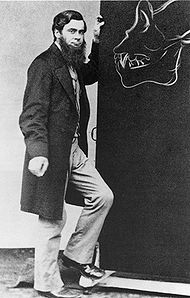
In 1996 a single photograph caused quite a stir at the annual Society of Vertebrate Paleontology meeting in New York City. The picture depicted a small dinosaur in the classic death pose—head thrown back and stiff tail levered straight up—but it was covered in a fuzzy coat of rudimentary feathers. Eventually named Sinosauropteryx, this creature was the first feathered dinosaur to be found since the first specimens of Archaeopteryx were chiseled out of German limestone quarries in the late 19th century. It was a stunning confirmation of what many paleontologists had come to suspect on the basis of anatomy alone—that birds had evolved from dinosaurs, and many characteristic avian traits appeared among dinosaurs first. John Ostrom, Bob Bakker and other paleontologists were not the first to support this idea. The hypothesis had once been among the most prominent explanations for the origin and birds, and many authorities credited the Victorian naturalist Thomas Henry Huxley as being the first to propose it.

Huxley is often included among Darwin’s supporting cast. He was a prominent public voice for evolutionary science while Darwin mostly kept track of the discussions and debates about evolution through correspondence. In fact, Huxley was among the first scientists to propose graded lines of descent for birds, whales and horses, but his determination of these evolutionary transitions required a circuitous process of discovery and realization. Huxley’s ideas about bird origins, especially, were not a perfect anticipation of our current knowledge, but a set of nuanced hypotheses which relied on Huxley’s idiosyncratic conception of evolution.

 
(More…)


South America’s First Dinosaur Tracks


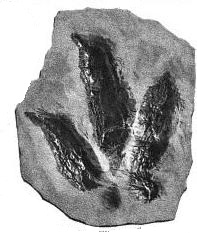
One of the many dinosaur tracks figured in Edward Hitchcock's Ichnology of New England.

Way back in 1839, no one had any idea what dinosaur tracks looked like. In fact, the word “dinosaur” did not even exist yet—the term would be coined by the British anatomist Richard Owen in 1842. Little wonder, then, that tracks now readily recognizable as belonging to dinosaurs were once attributed to prodigious birds and other creatures.

Edward Hitchcock, a New England geologist and theologian, established the study of dinosaur tracks in North America thanks to the abundance of trace fossils found in the Connecticut Valley. People had known about these tracks for a long time—the Lenape Native American tribe even had legends about them—but it wasn’t until the mid-1830s that they came under the scrutiny of naturalists who wanted to know how they were made and what sort of animals they represented. But Hitchcock and other American naturalists were not the only ones interested in these fossil impressions.

In 1839, while Hitchcock was pondering his tracks from New England, the German geologist Carl Degenhardt discovered what appeared to be large bird footprints left in the red sandstone of a Colombian mountain range. No illustration of the tracks was ever published, but given that dinosaur tracks were often confused with the footprints of large birds, it seems probable that Degenhardt truly did find imprints left by dinosaurs. According to paleontologist and historian Eric Buffetaut, this was probably the first recorded dinosaur tracks found in South America.

Despite the importance of Degenhardt’s discovery, though, news of his find quickly sank from view. The reasons why, Buffetaut hypothesized, had to do with how the discovery was communicated. A description of the discovery had been included in a report of a geographical, rather than a geological, journal, and a later newspaper blurb about the find mistakenly placed the tracks in Mexico instead of Colombia. These quirks of publication kept Degenhardt’s discovery obscure—it took over a century and a half for news of the tracks he found to be rediscovered.

Dinosaur Tracking

 Watch a video illustration of what scientists can learn from footprints

Outlining Olorotitan


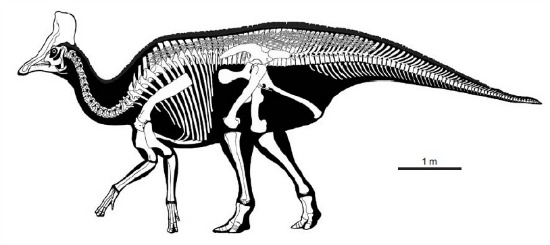
The reconstructed skeleton of Olorotitan, from Godefroit et al., 2012.


Olorotitan was one of the most elegant dinosaurs of all time. The 26-foot-long hadrosaur, found in the Late Cretaceous rocks of eastern Russia, had the typical deep tail, beefy legs and slender arms of its kin, but a fan-shaped crest jutting out of the back of the dinosaur’s skull gave it a striking profile. As with its North American cousins Corythosaurus and Lambeosaurus, the hollow head ornament is what makes this dinosaur stand out.


Read More

The Demise of a Wooden Dinosaur


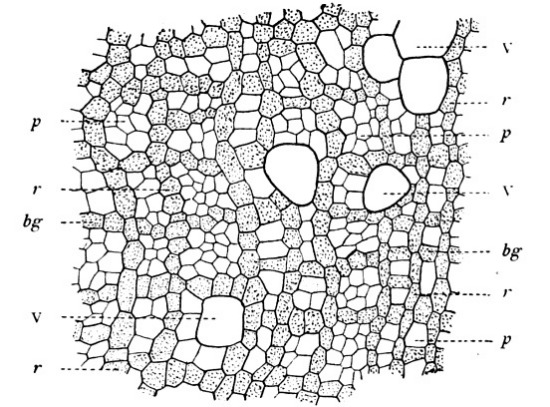
The microstructure of Smets' "dinosaur" revealed the fossils to be petrified wood. From Hovelacque, 1890. 

Naming a new dinosaur is a tricky thing. More often than not, previously unknown dinosaurs first appear as bits and pieces, and more than a few dinosaurs have been established on little more than isolated teeth. Thanks to the uncertainties often inherent in describing new dinosaurs, sometimes what seem to be novel species turn out to be parts of previously known animals. That’s just how science works—ideas are constantly being investigated and tested. But I’m sure that was little consolation to a 19th century scientist who mistakenly named a new dinosaur from petrified plants.

In 1887, naturalist Abbe G. Smets announced the discovery of Aachenosaurus multidens. Not much of the organism survived in the fossil record—just two dark-colored fragments—but Smets was so confident in his ability to restore the whole animal that he issued a full-scale restoration of a Hadrosaurus-like dinosaur.

Other naturalists were not impressed. Paleontologist Louis Dollo and botanist Maurice Hovelacque didn’t see a dinosaur in the fossil pieces. The fragments, Dollo and Hovelacque concluded, were actually bits of fossil wood!

Smets was outraged. How dare Dollo and Hovelacque deride his discovery? Smets viciously attacked his peers in print, but this only undermined his case. The microstructure of the fossils clearly revealed them to be wood, not bone, and Smets’ anger could not change that fact. As naturalists G.A. Boulenger and Richard Lydekker wrote in a 1889 Geological Magazine article about the controversy, Smets appeared to:
… have followed the Old Bailey maxim, that when you have no case, the only thing left is to abuse the plaintiff and all connected to him.
Indeed, Boulenger and Lydekker were especially aggravated to find that Smets had attempted to use their research to discredit Dollo and Hovelacque. Both men were well-respected naturalists and no amount of name-calling by Smets was going to change that. Smets was only making a fool of himself by trying to turn other naturalists upon each other, and his wooden dinosaur rotted away.

China’s Dinosaur Folklore


Theropod dinosaur tracks along Potash Road in Moab, Utah. Tracks like these have inspired myths about giant birds at locations all over the world. Photo by the author.


One such powerful figure, according to myths about footprints found in Changdu County, Tibet, was the Mountain Deity. During the construction of a highway through the area in 1999, construction crews found several large footprints Local villagers believed that all the noise had disturbed a god who dwelt in the mountains, and when the deity fled, it left the footprints in stone. Though not everyone agrees. Others think that the footprints represent King Gesar, a warrior featured in an epic poem about Tibet’s history. In reality, the tracks are the fore- and hindfoot impressions of a sauropod dinosaur. The shape of the tracks and their arrangement roughly resemble a large human footprint, and so the legendary explanation was born. Indeed, not all myths about dinosaur remains are ancient. In places where people don’t know about dinosaurs or paleontology, fantastic stories are still employed to explain the origin of fossils.

Read More